The pelvic floor chair: what it is and who it’s for
A seated, fully clothed session on the EMSEAT chair. Here’s how it works, why exercises still come first, and who should speak to their care team before booking.
By the Reset Circuit team, [Publish date]. 6 min read.
Pelvic floor health is something lots of people think about and very few talk about. Leaks after having a baby, after prostate surgery, or simply with age are common, and they can knock your confidence.
Our pelvic floor chair is one option some people like to explore. We want to be clear about what it is, and what it isn’t.
What is a pelvic floor chair?
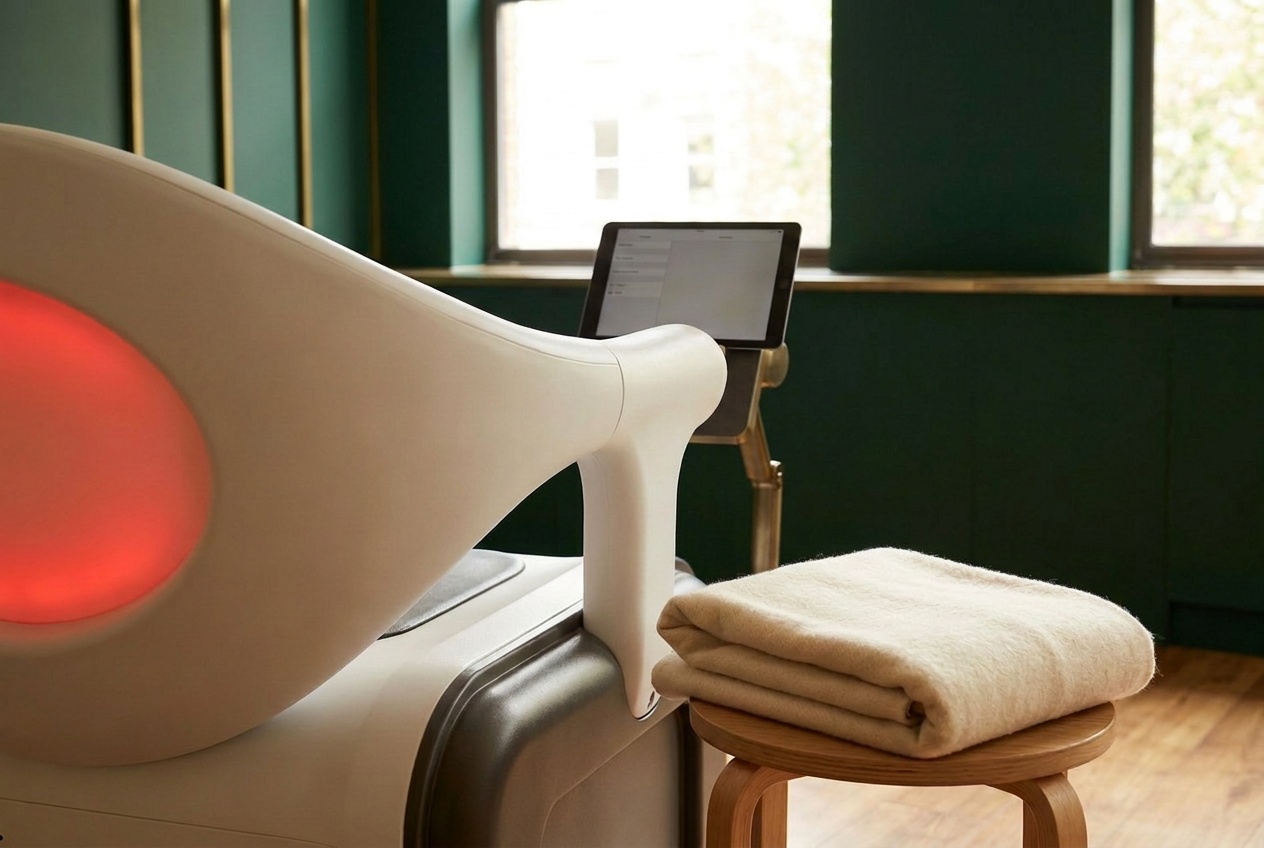
The EMSEAT chair is designed to make your pelvic floor muscles contract while you sit on it, fully clothed. You stay dressed throughout, and nothing is internal. A session lasts 20–30 minutes, and it starts with a private chat about what you need.
The benefits
Each one is marked with how sure we are. How it feels is what people tell us. Early evidence means small or mixed studies. Some evidence means there is more research behind it.
Private and non-invasive
You stay dressed, sitting down, in a private room.
Exercises come first
NICE recommends supervised pelvic floor muscle training. That recommendation is about exercises, not this chair.
Not proven for specific conditions
We haven’t seen product-specific evidence for claims about incontinence, prostate problems or recovery after surgery, so we don’t make them.
A chance to talk it through
For some people, the conversation is as useful as the session.
What does it feel like?
You’ll feel your muscles tighten and relax in a rhythm. It can feel strange at first, but it shouldn’t hurt, and we can turn it down at any time.
£60 for 20–30 minutes. A short health check before your first visit, and tea in the lounge after every one.At Reset Circuit, Newcastle-under-Lyme
Who should check with us first?
Please tell us before booking if any of these apply. It is not a complete list, and it is not medical advice. If you are unsure, ask your GP.
- A pacemaker, or metal implants near the pelvis
- A pregnancy, or you’ve given birth recently
- Prostate symptoms, or surgery (please check with your care team first)
How often should you go?
We’ll talk about this after your first session. If you’re under the care of a physiotherapist or urology team, follow their plan.
Questions people ask
Do I need to undress?
No. You stay fully clothed.
Is it suitable for men?
It can be. If you have prostate symptoms or have had surgery, check with your care team first.
Does it replace pelvic floor exercises?
No. Exercises are the recommended first step.
- NICE NG123: urinary incontinence and pelvic organ prolapse in women
- NICE CG97: lower urinary tract symptoms in men
This article is general information, not medical advice.
Thinking about trying it?
See what a session involves and what it costs, or send us a message with any question at all.