What is floating? A beginner’s guide to the float tank
Warm, salty water, a quiet pod and nothing to do. Here’s what a float involves, what people say they get from it, and what the research does and doesn’t show.
By the Reset Circuit team, [Publish date]. 6 min read.
Most of us are never fully off. Phones buzz, people talk, the radio’s on in the background. A float tank takes most of that away for half an hour or an hour.
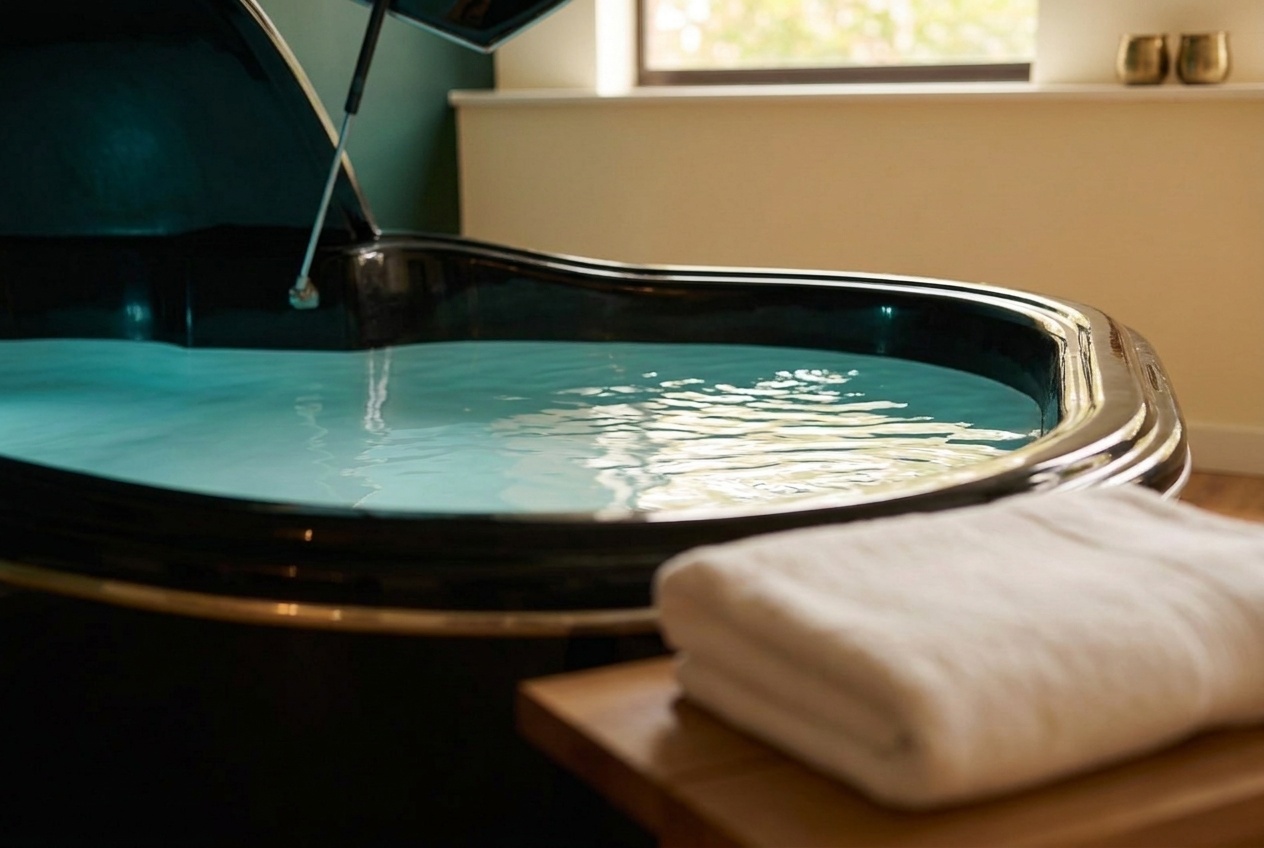
You lie back in shallow water with so much salt dissolved in it that you float without trying. The water sits around skin temperature, the room is quiet, and you choose whether the lid is open or closed and the lights on or off.
What is a float tank?
A float tank (sometimes called a float pod or flotation tank) is a large, enclosed tub filled with about 25–30 cm of water and a lot of Epsom salt. The salt makes the water dense enough to hold your body up, so your muscles don’t have to. Ours is a glossy black fibreglass pod with a hinged lid you control from the inside.
The benefits
Each one is marked with how sure we are. How it feels is what people tell us. Early evidence means small or mixed studies. Some evidence means there is more research behind it.
A deep sense of rest
With very little to see, hear or feel, many people say their mind slows down in a way that’s hard to find anywhere else.
Feeling less stressed afterwards
Small studies have linked floating with lower stress and a better mood straight after a session. We treat this as promising rather than proven.
Time with no demands on it
Your phone stays outside the room. For some people that hour is the point.
A break for tired muscles
Because the water takes your weight, you don’t have to hold yourself up. Many people find that relaxing after a long week or a hard workout.
What does it feel like?
For the first few minutes, most people notice how odd it is to float without effort. Then it gets quieter. Some people drift off; others just lie there thinking. You can open the lid at any time, and there’s no right way to do it.
£40 for 30 minutes. A short health check before your first visit, and tea in the lounge after every one.At Reset Circuit, Newcastle-under-Lyme
Who should check with us first?
Please tell us before booking if any of these apply. It is not a complete list, and it is not medical advice. If you are unsure, ask your GP.
- Open cuts, a fresh tattoo or a skin condition (the salt stings)
- Epilepsy, a heart condition, or low blood pressure
- A pregnancy, or if enclosed spaces make you anxious
How often should you go?
There’s no set number. Some people float once and decide it isn’t for them; others like it as a regular reset. If you’re curious, start with 30 minutes, then try 60 if you enjoyed it. The 3-float pack (£100) is there if you want to come back.
Questions people ask
Can I float if I can’t swim?
Yes. The water is shallow and the salt holds you up.
Will the salt get in my eyes?
It stings if it does, so keep wet hands away from your face. [Confirm what we provide: towel, fresh-water spray.]
Do I wear anything?
[Confirm our policy: most float centres suggest swimwear or nothing in a private room.]
- [Research sources to be added before launch]
This article is general information, not medical advice.
Thinking about trying it?
See what a session involves and what it costs, or send us a message with any question at all.